
Surf pop music is one of those genres you can feel before you can define it. Bright guitars, easy melodies and vocals you can hum. This is a plain, surfer-style breakdown of what it is, how it differs from classic surf rock, and what to play around a surf day in San Diego.
If the playlist makes you want to get in the water, we cover that too, with a quick guide to picking a lesson at the end.
Surf Pop Music
The short version. This style takes the relaxed feel of beach culture and wraps it in pop structure. Songs usually have clear melodies and catchy choruses, and they tend to run a few minutes rather than stretching into long jams.
The ingredients. Many tracks lean on clean or lightly reverbed guitar, simple drums and easygoing vocals. Harmonies are common, and lyrics often circle around summer, friendship, waves and nostalgia.
Why it feels like the coast. Reverb gives guitar a wide, airy sound. Add a laid-back tempo and you get music that sits nicely behind a sunny day.
Surf Pop vs Classic Surf Rock

Surf rock and surf pop share a family tree, but they are not twins. Here is a quick way to tell them apart.
- Classic surf rock: often instrumental, with fast picking, twangy guitar and a high-energy feel.
- Surf pop: usually built around vocals, hooks and harmonies, with a smoother, more polished sound.
- Mood: surf rock tends to feel driving and dramatic. Surf pop tends to feel warm and relaxed.
- Song shape: surf rock often centers on a guitar lead. Surf pop often centers on a chorus.
None of this is a strict rulebook. Plenty of songs blur the line, and fans love to argue about it.
California Surf Pop
Where the sound took root. California surf pop grew out of the same coastal culture that shaped surfing itself. Beach towns, sunshine and summer drives shaped the imagery long before the genre had a tidy label.
How it keeps evolving. Newer bands often mix that beachy feel with indie, dream pop or lo-fi touches. If you want to explore, try searching terms like surf pop, beach pop or dream pop in your streaming app.
Music for Your Beach Day
Before the beach. Mellow, mid-tempo songs with warm guitars suit the drive or the walk to the sand. They set a calm mood without winding you up.
After the water. Slower, dreamy tracks fit that tired and happy feeling when you are on a towel with a snack.
In the water. Leave the music on the sand. In the ocean, your attention belongs on the waves, other surfers and the lifeguards.
From Playlist to Lesson

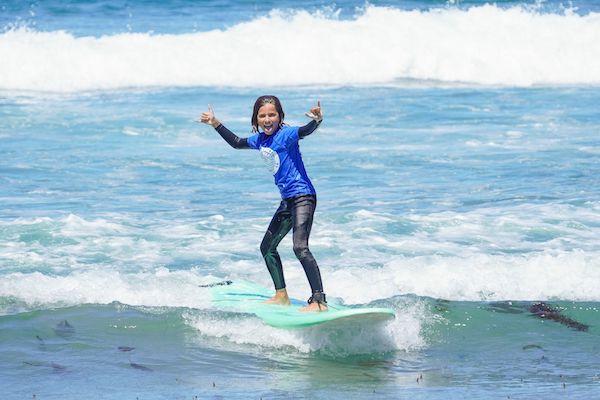
A playlist is great, but the real mood comes from being out there. Our surf lessons in Mission Beach are one way to do it. Mission Beach Surf School is part of Pacific Surf School, and we have been teaching surf in San Diego for nearly two decades. Lessons run every day of the week, all year round.
Lessons are booked at two locations, Pacific Beach and Mission Beach, and the Book Now buttons on every page let you choose. Every format runs 90 minutes with all equipment included, so the main choice is how many people are in your lesson.
Pick Your Format
- Private, $155 per person. One-on-one. See the private surf lessons page.
- Semi-private, $118 per person. 2 to 3 people. See the semi-private surf lessons page.
- Group, $98 per person. 4 to 5 people, the lowest price per person of the three. See the group surf lessons page, or read why group surf lessons are great.
Single lesson or package. Each format can be booked as a single lesson. If you want more time in the water, the surf lesson packages let you buy 3 lessons and get 1 free (4 lessons of 1.5 hours), from $294 per person.
Crews and kids. Families, friends and teams can book together, up to 25 people. Kids are welcome. We recommend they be at least 5 years old, and they need basic swimming skills.
What to Know First
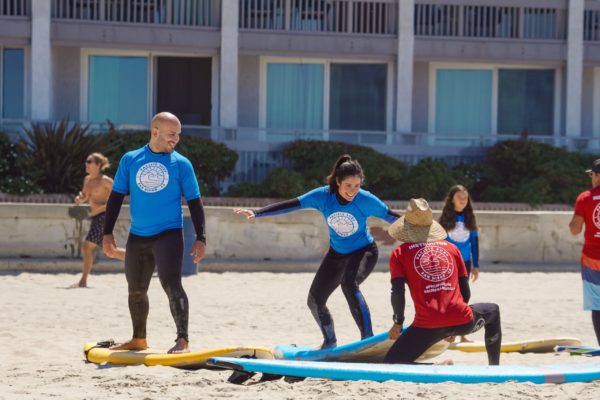
On the sand. Every lesson starts on the sand: equipment knowledge and safety, board handling and positioning, ocean awareness, paddling and getting through waves, wave judgement and surf etiquette, and the pop-up. Beginners usually learn on a soft-top longboard, because it is stable and easier to learn on.
What to bring. The surfboard, wetsuit, rash guard and leash are provided. You bring a towel, sunscreen, a bathing suit, and water or snacks. For more pointers, read our tips for beginner surfers.
Mission Beach etiquette. The surf-only zone is marked by black and yellow checkered flags. Respect other surfers and follow the lifeguards. All our instructors are CPR and First Aid certified.
After your lesson. In Mission Beach you can stroll the boardwalk, eat at the many places nearby, visit Belmont Park and its rides, or rent a bike. A photographer can also capture your lesson with a photo package.
FAQ
Is surf pop the same as surf rock? Not quite. They are related, but surf rock is often instrumental and guitar-driven, while surf pop usually leans on vocals, harmonies and catchy choruses with a smoother sound.
What kind of music suits a beach day? It depends on your mood. Relaxed, mid-tempo songs with warm guitars are a common pick, faster tracks add energy, and slower dreamy ones suit winding down.
Where can I find answers about booking? Check our FAQ page, or call (858) 808-2669 for questions and bookings.
Ready to pair your playlist with some real waves? Pick a format on the lesson pages above and hit the Book Now button. See you on the sand.